• What happens to the electronic waste produced by the United States?
A lot of it isn't really recycled. What happens
with an awful lot of it is it gets very minimally processed here where
the recycler might take out some of the most profitable parts to the
computers, in particular. And then the rest of it gets shipped overseas,
usually to developing countries, a lot of it going to Asia, China in
particular.
• What happens to e-waste after it arrives in developing countries?
When it arrive to developing countries, it' almost completely dumped. It goes into
areas where there are some not-modern processes that happen.
• Why does so much e-waste get shipped to Asia?
Because recyclers can make money selling it. In Asia, there is a market for
this system of recycling where people can make money off
removing the metals. The bad thing is that many of these countries just don't have the regulations where they can prevent it from
happening - prevent the waste to enter. It's all illegal import.
• What are the negative effects of dumping e-waste?
First of all, it's an exposure problem to the communities
there. The people that are handling it have no kind of
protective equipment, and that's clearly a negative effect. They have literally no gloves and no
respirators, so they bread the toxic chemicals. Then, when they burn
it, the whole communities are breathing in these toxic chemicals. To make things worse, this chemicalsare
getting into their water systems in an area of China.
Contaminant levels are so high, that they even have to truck in all of their
water.
• How do the toxins in e-waste return to the United States?
The study that was done by a professor in
Oregon did show that the toxin is returning to the United States; the discovery? Is in some of the children's jewelry
that's purchased at discount stores to lead in solder, lead
from electronic waste. Practically, this can be called a poison cycle.
• What can concerned citizens do about e-waste?
Mr. Kyle states two possible things that citizens can do. The first one is to follow the pledge program that
responsible recyclers have pledged to not to mantain or execute these
practices, not export. The other thing that consumers can do is start to ask their frecuent
companies to offer take-back
programs, as consumers have some power in their purchasing dollars
to say that they want to buy products from companies who will take them back from them when they're done with it and recycle them responsibly.
martes, 10 de septiembre de 2013

martes, 14 de mayo de 2013
Women and the Family in Nazi Germany
1) How did Hitler try and encourage marriage as soon as he came to power?
Introducing the "Law for the Encouragement of Marriage", which stated that the government would give all newly married couples a 1000 mark loan and the couple could keep each quarter of this loan with every child they had.
2) According to Nazi ideology, what roles did men and women have?
Men were to Nazis the productive and creative in the world of politics and war, while women were reproductive and had their important role in the family home.
3) Using the information on this sheet, create a spider diagram clearly showing what women were expected to do, and what was not acceptable.
4) Using your spider diagram, create a table illustrating differences between our society today and Nazi Germany in the 1930s.
5) Why do you think Hitler placed such importance on the role of women?
Introducing the "Law for the Encouragement of Marriage", which stated that the government would give all newly married couples a 1000 mark loan and the couple could keep each quarter of this loan with every child they had.
2) According to Nazi ideology, what roles did men and women have?
Men were to Nazis the productive and creative in the world of politics and war, while women were reproductive and had their important role in the family home.
3) Using the information on this sheet, create a spider diagram clearly showing what women were expected to do, and what was not acceptable.
4) Using your spider diagram, create a table illustrating differences between our society today and Nazi Germany in the 1930s.
5) Why do you think Hitler placed such importance on the role of women?
domingo, 18 de noviembre de 2012
martes, 6 de noviembre de 2012
Picture Analysis

"Eugenics is the study of the
agencies under social control that may improve or impair the racial
qualities of future generations either physically or mentally."
– Francis
Galton, first cousin and associate of Charles Darwin, circa 1883
What do you notice first about
this image and why?
• Who are the people in this image? What emotions are
present?
• What is the situation? What is happening?
• What is the setting (place and
time)?
• Does the picture contain any repetition, framing, or balancing (colours signaling something in particular)?
• What message or theme does the
picture seem to convey? What aspects of the picture make you think this? Is
it supposed to speak for or against an issue?
1) The racial diversity, because of the amount of people that is in the picture.
2) There are people from many races and social classes, judging their appearance. Everyone looks happy and seems to be nice people.
3) It doesn't seem that they are doing something apart from smiling to the camera. They are just standing there, representing unity.
4) The setting is a white background, and there's no clear notion of time.
5) The balance of white background and amount of people gives the image of tranquility, a peaceful enviroment helps to understand the symbolism of the image: each person in the photograph is feeling comfortable with the ones that are sorrounding him.
6) Racial equity, given by the armony and simplicity of the picture. The idea of evolution is given by the quote of Eugenics, promoving in a positive aspect the improvement of racial qualities in future generations.

What do you notice first about this image and why?
•What emotions are present?
• What is the situation? What is happening?
• What is the setting (place and time)?
• Does the picture contain any repetition, framing, or balancing (colours signaling something in particular)?
• What message or theme does the picture seem to convey? What aspects of the picture make you think this? Is it supposed to speak for or against an issue?
1) The missing part of the trees, because the colors doesn´t fit with the rest of it.
2) The natural concept and beauty gives an image of happiness and tranquility, but the missing part of this "lungs" brings a menacing concept of sadness that is going to consume this trees.
3) There are trees misssing, in a completely green area, so one can assume that they were removed by human beings. It gives the image of a dying nature.
4) One can infer that it is the modern times, because men has interacted with this nature in the way of extracting resources. The place is simply one natural area that hasn't been built-up with a city yet.
5) The balance of the colours suggests that something,in this case manking probably, is threatening the very existence of this beautiful background.
6) Enviromental pollution, this image speaks against it showing a clear and simple picture of nature being destroyed by human beings. The pureness of the green area expresses the maximum beauty of what is actually natural, a concept that is absent nowadays. Humans are consuming this limited resources, the ones that helps us to have a better life, so we as moral thinkers should return the favour by protecting this enviroment in which we depend. The lungs of nature are dying in this symbolic image.
3) There are trees misssing, in a completely green area, so one can assume that they were removed by human beings. It gives the image of a dying nature.
4) One can infer that it is the modern times, because men has interacted with this nature in the way of extracting resources. The place is simply one natural area that hasn't been built-up with a city yet.
5) The balance of the colours suggests that something,in this case manking probably, is threatening the very existence of this beautiful background.
6) Enviromental pollution, this image speaks against it showing a clear and simple picture of nature being destroyed by human beings. The pureness of the green area expresses the maximum beauty of what is actually natural, a concept that is absent nowadays. Humans are consuming this limited resources, the ones that helps us to have a better life, so we as moral thinkers should return the favour by protecting this enviroment in which we depend. The lungs of nature are dying in this symbolic image.
miércoles, 3 de octubre de 2012
martes, 2 de octubre de 2012
Play Reading Summary Form (Guide)
Title: A Midsummer Night’s Dream
Author: William Shakespeare
Date: Between 1590 and 1596
Period/Style/Genre: Comedy
Number of Characters: 17 (Theseus, Hippolyta, Philostrate, Lysander, Demetrius, Hermia, Helena, Quince, Lords and Attendants, Pyramus, Thisbe, Wall, Moonshine, Lion, Oberon, Titania and Puck)
Setting: Athens, the palace of Theseus
Character Name Age Gender Other
Theseus 25 M Duke of Athens
Hippolyta 23 F Queen of Amazons
Philostrate 40 M Master of the Revels
Lysander 18 M In love with Hermia
Demetrius 19 M In love with Helena
Hermia 17 F In love with Lysander
Helena 18 F In love with Demetrius
Quince 33 M Carpenter Oberon 45 M King of fairies
Titania 38 F Queen of fairies
Puck 24 M Possible protagonist
Summary
Act V, scene i
The scene starts at the palace of Theseus, where he is telling the story of the magical misventures of last night to Hippolyta (which of course, the Athenian youths told him). Although Theseus is speaking about the story, he doesn't believe it; concerning that is an interesting story but for the imagination only. However, there is a suspicion of the story's truthfulness by his wife, mainly because all the story of the people that fell in love are the same.
The youths return to the castle, being recieved nicely by the duke of Athens, stating that before going to sleep the guests should make a perfomance. Then he calls Philostrate to read him a list of plays to choose, but find all of the plays unacceptable. Philostrate then tries to warn the duke and tells him of
the Pyramus and Thisbe story, which the craftsmen
have prepared; saying that it is terrible, so he suggests strongly not to see it. Theseus, not listening to the suggestions, states that no matter how poor the perfomances are; there is merit in the dutiful attitude of the craftsmen, so he will see it.
The audience sits down and wait, and Quince enters
stage to present a prologue to the play while he hesitates. Making strange pauses, the combination of sentences that he makes have no sense at all, leaving the audience questioning themselves.
The other actors enter after this, playing the roles of Wall and Moonshine. They act out a awkward version of
the story, during which the nobles joke among themselves
about the strange speeches and bad acting. Bottom,
in particular, makes many messy statements while playing his role.
Pyramus and Thisbe meet at, and speak across, the actor playing
Wall, who holds up his fingers to indicate a chink. Snug enters with the role of a lion, but then talk to the ladies and thell them that he actually wasn't a lion. He roars, scaring Thisbe away, and then rends her mantle. Because of finding the the bloody mantle, Pyramus commits
suicide. Thisbe commits it too when finding Pyramus dead. Right after the play ended, time in which Bottom pretends to kill himself, Bottom asks to the audience if they would like an a bergamask dance or epilogue; Theseus
replies that they will see the dance .
Bottom and Flute makes the dance,and after that the full casting goes to sleep.
Special Notes
This chapter actually has an epilogue that isn't mentioned on many versions of the book, in which the fairies enter the palace and sing a magical song that makes each lover true to each other, and also a spell in which anyone of the audience that felt offended by the play will remember it just as a dream.
Personal Notes and Reactions
martes, 10 de julio de 2012
Film Analysis, Comparison between a prime-time news and a news channel
Film
Analysis, Comparison between a prime-time news and a news channel
Fox
news link (news channel):
http://video.foxnews.com/v/1706741245001/us-officials-keeping-close-eye-on-egypt-after-election/?playlist_id=87485
The
topic of this video is the US officials keeping close eye on Egypt after
election, because of the Muslim brotherhood candidate that won Egypt's first
free presidential elections. Two reporters speak about this, showing images of
the president and the doubt of how much power will he have.
Shots
and Framing
The
report opens with a Medium Shot in which the reporter (his name is never
mentioned) start talking about the elections in Egypt. Then, a Two Shot is used
to introduce Jonathan Hunt and then another Medium Shot to show him speaking
about the decision of how much power shall president Morsi have. Medium Shot is
maintained after the pieces of videos and photos that they show about the
topic, focusing of course, on the one who speaks.
Camera
Angles
The
only angle used is Eye Angle, in the whole report the two speakers are shown
from a normal height. This the most common angle used because it's natural.
Camera
Movements
The
only movements in the news are on the pieces of videos that the channel uses to
support the fact. Among this videos are movements such as Pan, Zoom and
Dolly/Tracking. By not using movement in the studio, the channel implies that
they want the audience to have full attention on the one who speaks; there's
nothing else to see.
Lighting
The
lighting is High Key, showing all the images flooded with light, creating a
bright and open-looking scene. All is clear, so there's nothing the channel
wants to distinguish. There's no focusing on anything special with the lights;
they are showing this as they really are.
Editing
Techniques
Shot-Reverse-Shot
is the most common Technique in the video, when one speaker gives that role to
the another one. The other technique that can be found is the Wipe, used to
show the recordings of the president.
Sound
The
sound is completely Diegetic, the speakers hear everything that's going on in
the video, even when the recordings are shown, the audience can hear only the
voices of Jonathan Hunt and the anonymous reporter. Being a common piece of
news from a news channel, there's no need to use Non-Diegetic Sound because the
NEWS are the only thing the audience need to hear.
Bias
Bias
is very clear in this video, Fox News is even recognized for being one of the
most Biased channels worldwide. Even the title indicates bias: "US
officials keeping close eye on Egypt after election". The whole video and
the title indicates and establishes the US as something superior, something
that is present on everything. While they could make another thousand stories;
Fox News chose to dedicate time to show the world that the US is watching
Eyptians elections, because they don't want them to have more power than
necessary. So this piece of news is actually with a huge amount of Bias, a
"National" one that sees the United States as something taller and
stronger than anything else.
CBS
link (primetime news):
http://www.youtube.com/watch?v=DfmQkNKo_0A&list=UUlzCn8DxRSCuMFv_WfzkcrQ&index=1&feature=plcp
This
video shows an interview with the cofounder and actual CEO, the topic is the
rivalry between two of the biggest companies of the share market; one of them
is new. The two companies are Facebook (the new one) and Google. The discussion topic is that both companies
will now be seen as "enemies" because of their magnitude and
influence on Wall Street, using the fact that Facebook share price dropped 11%.
Shots
and Framing
The
video starts with an Establishing Shot, in which the studio and the people who
will participate in the interview are shown. A medium shot follows it by
showing Rebecca Jarvis, who is talking to Charlie Rose about the advertising
necessary to keep the revenue. After that, a Close Up that shows the three
people talking and focuses on Rebecca. The rest of the video, which is an
interview with the Google CEO, Larry Page, is in Medium Shot showing Charlie
and then Larry giving answers to him about the Facebook Share Drop.
Camera
Angles
Eye
level is kept during the entire interview, because as regular news there is no
need to give anyone a "powerless" or "threatening"
position; so normal height is always maintained.
Camera
Movements
There's
not many movement along the video; the only one used is Pan at the beginning to
show the studio; and then to change the speaker. This technique is used to maintain
organization on the interview, so the viewer can actually get the message.
Lighting
High
Key is used in the studio; which should always be clear, "pure"
because the channel wants to give a good image of them; so there's a bright and
open-looking scene at the beginning. The interview uses Front Lighting in Larry
Page, giving him the appearance of being an honest and good person; answering
all the questions with the truth.
Editing
Techniques
There
are two editing techniques used in the video: Shot-Reverse-Shot is used
constantly to change the speaker during the whole video; and there's a Wipe
when they pass from the studio to the interview.
Sound
There's
only Diegetic sound during the video, because there's no need to put any
background sounds or music while an interview is taking place; full attention
must be paid to the speakers.
Bias
Though
there's not many information and characters that can be qualified as Biased
because of the short runtime of the interview, there is one clear Bias in the
video and it's the point of view of only one person in front of a problem.
Facebook shares dropped; but the video only shows the Google CEO giving HIS
perspective about it, there's no point of view of any Facebook authority; so
the audience is losing certain amount of information that could be important to
understand better the problem. The omission of information is a classic bias,
and in this case the one used.
Analysis
So
long we have the filming and editing techniques in both videos, but why are
they used for? News channel and movie directors among others use this styles to
modify the real meaning in the message; so the audience can receive the
information in the way the transmitter wants to send it. So the author can
produce different reactions in the viewer using the style instead of the
substance, and this case in particular is no exception. The ones behind camera
can give the audience suspense, thrills or even make them change their
ideology. The following lines will show how these techniques in both news
videos may change the perspective of the author; based on the way they are shown.
To understand in a better way this "twist" that the authors may do
the concept of bias must be clear. The definition of bias is: An inclination to
present or hold a partial perspective at the expense of (possibly equally
valid) alternatives. Anything biased generally is one-sided, and therefore
lacks a neutral point of view. Bias can come in many forms. So there is a
direct relationship between filming, editing techniques and bias.
Personalization, Dramatization and Authority disorder are the three kind of
bias that are going to be analyzed, and also the techniques.
First of all this analysis is going
to mention the techniques of the first video (Presidential Elections). The
medium shot is the most used type of shot, so it is no surprise that it is
included in the video to show the ones who speaks. This shot is plain simple,
to gain the attention of the viewer and have a common perspective. The camera
angle implied is quite common too: it's the Eye Angle, a natural look at the
news, nothing complex. In terms of camera movements, the news while being in
the studio doesn't contain any movements, but when showing the videos of the Egyptian
President and the militia, movements such as Pan and Zoom are used. This
decision has two possible reasons: The videos may be external from the news
channel, or the news channel included movements to give the recordings more
drama and a sense of concerning. Following up, the amount of light in the video
is the High Key technique, flooding the scenery with light; giving an
impression of purity in the news: all the images are shown just like they are
in reality, so there's no "good" and "bad" guy according to
the news (Or at least, that's what they try to transmit). The editing and the
sound techniques are nothing special; just the necessary amount to change the
speaker and focus your attention on him (that's why there's diegetic sound).
Perhaps the most important thing in this video is the bias, which is very
clear. Fox News is recognized for being one of the most biased countries
worldwide, even the title of the news implies bias: "US officials keeping
close eye on Egypt after election." There is a clear case of Authority
Disorder in this video: United States, according to the video, is something
superior to Egypt; so superior that in this particular case that it has to
watch it's presidential elections. We, as viewers, assume that Egypt is somehow
a country that needs to be "controlled" in order to be right, but it
really has to be? Probably, probably not; but why sustain that an action so
patriotic and political such as the Presidential Elections that this country
takes needs to be supervised?
Second, the
techniques of the primetime news video (Google CEO speaks about Facebook as a
potential rival). Shots and framing in this one are just like in the first;
Establishing shot to show the studio and almost constant medium shot to show
the speaker in a common perspective. Eye level camera angle is used (Yes, just
like the last video) to keep a normal profile of anyone on screen; nobody is
the "powerful" and nobody is the "weak one". In terms of
camera movement, Pan is the only movement aviable in the video implied for
organization and order (So while the speaker switches there should be no
disorder). The lighting that this video contains is High Key, so all the video
is bright enough to see things right like they actually are, besides Larry Page interview; which uses Front
Lighting to give the public an image of a "honest" and
"good" man who only says the true. The sound and editing techniques
are another thing in common with the
news channel: Wipe and Shot-Reverse-Shot edition and diegetic sound,
both very typical and used simply for attention. Bias is not as relevant or as
remarkable as seen in the news channel, the reason: A short run-time and
precise news. One thing that may qualify as bias here is the omission of
information. Where is it present? By showing the perspective of only the Google
CEO, while being a Facebook-related interview. Alright, Facebook shares
dropped, but why show the Google CEO only? Why is no Facebook authority
speaking? Seems biased. So only one perspective of the facts are shown, a
perspective of the competitors of Facebook; so probably Mark Zuckerberg isn't
happy at all after watching CBS at night, is he?
To conclude, until now we have the techniques
of both a primetime and 24-hours news channels such as CBS and Fox News
respectively. In this case (though occasionally it's the other way round) the
news channel includes, although in a minor quantity, more editing and filming
techniques than the primetime news. So the filming and runtime is more
elaborated by Fox News in this particular case, and so is the bias, which is
another important topic. Bias in Fox News is something a lot more noticeable
that in the CBS video, because the authority disorder is a kind of bias
specifically, while the omission of information is somehow a lower
"grade" of bias because it doesn't modify the facts, only mention a
part of them while the disorder generates a different and totally subjective
vision of the events. So as a summary; news channels are generally more biased
because they give "their" vision about the facts while transmitting
news all day long, and at the same time primetime news offer a less biased and
straightened vision (or at least in this case). Whatever the case is, at least
now we know that ALL news around the world, and I repeat, ALL OF THEM have
bias!
miércoles, 25 de abril de 2012
Chapter 2 (Neuweiler - Leyton - Jander)
1) What characters are introduced?
The Fleischmanns, the two Annamarie's friends and the Steiners.
2) Choose two characters and select a quote to describe them physically or psychologically.
Uncle Lajos: "We must accept God's ordinances in regard to us, at which she held her tounge".
So it is deduced that Lajos is a very religious person, one that handles Hebrew well.
Annamarie's friend: "We Jews are different from other people".
This quote gives a psychological profile of the character, one that realized that Jews were being excluded from society; so this character is a melancholi, realistic one.
3) What is the narrative technique? Provide evidence.
The narrator is in first person, and it is a protagonist narrator too: all the book is told in the perspective of George Koves. "This evening I was with her in the other room to look..." (Page 33)
4) Describe the setting of this chapter.
The setting is: Csespel, George's city of origin: Budapest (in which we can find his house and Annamarie's). The season was Summer. It was in the middle of WWII.
The Fleischmanns, the two Annamarie's friends and the Steiners.
2) Choose two characters and select a quote to describe them physically or psychologically.
Uncle Lajos: "We must accept God's ordinances in regard to us, at which she held her tounge".
So it is deduced that Lajos is a very religious person, one that handles Hebrew well.
Annamarie's friend: "We Jews are different from other people".
This quote gives a psychological profile of the character, one that realized that Jews were being excluded from society; so this character is a melancholi, realistic one.
3) What is the narrative technique? Provide evidence.
The narrator is in first person, and it is a protagonist narrator too: all the book is told in the perspective of George Koves. "This evening I was with her in the other room to look..." (Page 33)
4) Describe the setting of this chapter.
The setting is: Csespel, George's city of origin: Budapest (in which we can find his house and Annamarie's). The season was Summer. It was in the middle of WWII.
lunes, 16 de abril de 2012
Chapter 8 Summary
Chapter 8: The chapter opening includes Georg Koves in the Buchenwald camp, where he gives us a vision of how the showers where, and his excitement because of the hot water. He is transported into a real bed, with real treatment. For him, things were starting to change. Food started increasing, and he met a guy named November that was next to his bed. He tries to comunicate with the other patients that were with him; and also met a French doctor who gave him sugar lumps. The chapter continues with hope expectations, each time more atention, less hunger; better living. He spent in bed most of the time, knowing that now he has just survived.
Pietka is introduced in the novel as a new character, a man who valued freedom like nobody else. Later on, he stole a rifle; and say a few words to the whole camp: "We are free!"
Pietka is introduced in the novel as a new character, a man who valued freedom like nobody else. Later on, he stole a rifle; and say a few words to the whole camp: "We are free!"
viernes, 13 de abril de 2012
Oral presentation: Mazes in Chapter 8
* 1.- The maze or labyrinth remounts it’s origins in the greek culture, the first one was built by Daedalus for King Minos to contain the titan known as the minotaur. The mazes were distinguished beacuse of their complexity and miles of lenght, the ones who managed to enter and leave were considered heroes.
* Labyrinth were sometimes used as a way to punish prisoners, and many of them died inside because they didn’t managed to find the exit.
* The point here is that a maze can be considered many as a prison or a way to be trapped, taking the freedom away, and bringing a claustrophobic feeling. Mazes are even used in many pshycological tests to demostrate the tendence of independence that one has.
* There is also a phenonenom called “mental maze”, which means that the pacient has a limited vision of the world, is trapped in a mental illness to be psychollogically disturbed. An example of that is a case of a father that locked his daugter in the basement of the house for 24 years, in Austria, and the girl in the end needed 1 month of psychological treatment to answer the questions that the police made to her.
* 2.- Just as we saw in the interview with Imre Kertész, there is a comparisson between the labour camps and the labyrinths. Both have very similar functions , not specific ones but according to the message they want to transmit. Labour Camps and mazes have very similiar architecture, they are usually closed spaces with one entrance that was used as an exit too; they where made specially for locking up someone inside so they has solid mechanisms such as walls and paths.
* Both camps and mazes change people, insert fear in them. Both of them lows the self-esteem in prisioners, and increase the claustrophobia. Having this conditions, anyone who is inside can be considered a slave of his own mind.
* It is because of this that many people (Jews for example) that were on the labour camps didn’t even manage to complain about their living conditions, because they knew they were trapped. Some people even commited suicide because of this; their freedom was taken away along with their dignity . This atrocities can be perfectly compared to slavery, and if not it’s definitely worse.
* 3.- In chapter 8, there are 2 mazes that can be found: the physical and the psychological one.
* The first one can be found clearly all along the chapter; it’s the Buchenwald concentration camp. It’s well known due global history that this was one of the principal camp in the whole holocaust. So this would the first maze in the chapter; the physical space in which Georg Koves is in, one that doesn’t allow him even think in get out of there. He was under constant surveillance, and slept in a very close space with alot of other children; and made a friend that was a prisoner doctor, that felt affection for children that spoke french; and later on he establishes friendship with Georg.
* The second one is the psychological maze that can be found in the chapter, in several moments of it. In the first pages of the chapter, Georg states that he loved the showers of the cap, that were actually in very poor and in bad conditions. Later in the chapter, he is assigned to sleep on a box with quilts above. This is what he though about it: “To begin with, I couldn’t believe my own eyes. Over on the left I could see two rows of regular boxes there too, except the planks were covered by a layer of pink, green, and mauve quilts.” (page 193). This proofs that Georg’s mind has been changed. At the beggining of the novel, he was a kid with normal manners; but now he has been in the maze too much, he finds what is something miserable attractive and comfortable. He was happy because he would sleep in a box with quilts in it.
* So it’s very clear that Mazes were present in the novel, specifically on chapter 8, such as mental and concrete ones. This is a topic that the same Imre Kertész has stated as something relevant in history of humanity, and it’s something worth of a monument in Berlín.

* Labyrinth were sometimes used as a way to punish prisoners, and many of them died inside because they didn’t managed to find the exit.
* The point here is that a maze can be considered many as a prison or a way to be trapped, taking the freedom away, and bringing a claustrophobic feeling. Mazes are even used in many pshycological tests to demostrate the tendence of independence that one has.
* There is also a phenonenom called “mental maze”, which means that the pacient has a limited vision of the world, is trapped in a mental illness to be psychollogically disturbed. An example of that is a case of a father that locked his daugter in the basement of the house for 24 years, in Austria, and the girl in the end needed 1 month of psychological treatment to answer the questions that the police made to her.
* 2.- Just as we saw in the interview with Imre Kertész, there is a comparisson between the labour camps and the labyrinths. Both have very similar functions , not specific ones but according to the message they want to transmit. Labour Camps and mazes have very similiar architecture, they are usually closed spaces with one entrance that was used as an exit too; they where made specially for locking up someone inside so they has solid mechanisms such as walls and paths.
* Both camps and mazes change people, insert fear in them. Both of them lows the self-esteem in prisioners, and increase the claustrophobia. Having this conditions, anyone who is inside can be considered a slave of his own mind.
* It is because of this that many people (Jews for example) that were on the labour camps didn’t even manage to complain about their living conditions, because they knew they were trapped. Some people even commited suicide because of this; their freedom was taken away along with their dignity . This atrocities can be perfectly compared to slavery, and if not it’s definitely worse.
* 3.- In chapter 8, there are 2 mazes that can be found: the physical and the psychological one.
* The first one can be found clearly all along the chapter; it’s the Buchenwald concentration camp. It’s well known due global history that this was one of the principal camp in the whole holocaust. So this would the first maze in the chapter; the physical space in which Georg Koves is in, one that doesn’t allow him even think in get out of there. He was under constant surveillance, and slept in a very close space with alot of other children; and made a friend that was a prisoner doctor, that felt affection for children that spoke french; and later on he establishes friendship with Georg.
* The second one is the psychological maze that can be found in the chapter, in several moments of it. In the first pages of the chapter, Georg states that he loved the showers of the cap, that were actually in very poor and in bad conditions. Later in the chapter, he is assigned to sleep on a box with quilts above. This is what he though about it: “To begin with, I couldn’t believe my own eyes. Over on the left I could see two rows of regular boxes there too, except the planks were covered by a layer of pink, green, and mauve quilts.” (page 193). This proofs that Georg’s mind has been changed. At the beggining of the novel, he was a kid with normal manners; but now he has been in the maze too much, he finds what is something miserable attractive and comfortable. He was happy because he would sleep in a box with quilts in it.
* So it’s very clear that Mazes were present in the novel, specifically on chapter 8, such as mental and concrete ones. This is a topic that the same Imre Kertész has stated as something relevant in history of humanity, and it’s something worth of a monument in Berlín.
miércoles, 21 de marzo de 2012
Nazi Propaganda
What political message(s) are these pictures trying to convey?
They show socialism as something superior and German citizens must vote for it (Hitler's party), that it's going to bring order and peace to the country.
What image of Germans are these pictures trying to convey?
These pictures try to convey that with Hitler in command; Germany can be a very powerful country and military force. With the concept of Hitler in command, he would be the "absolute leader".
How do they portray this image?
The posture Hitler adopts in this picture gives him an image of a "serious leader", one who would do anything for the prosperity of his country.
 What colors are used?
The pictures that express peace use light colours; happy ones. In the other hand, the ones that have war meanings and Jewish have dark and serious tones.
How do the people look?
German civilians look very happy in the propaganda, military autorithies look serious and Jewish people look very sad.
What characteristics of these men are similar?
Both civilians and militaries look satisfied of that political totalitarism; obviously for the convinience of them both.
How do the artists convey these characteristics?
Artists use different colours and faces expressions in their works (paintings, pictures) to reflect a certain emotion emanated by the image itself, to give "life" to it. The principal propaganda minister of the Nazi party was Joseph Goebbels, known because of his many works for Adolf Hitler, making one of the biggest campaigns ever known. They might have been evil, but they were very clever.
They show socialism as something superior and German citizens must vote for it (Hitler's party), that it's going to bring order and peace to the country.
What image of Germans are these pictures trying to convey?
These pictures try to convey that with Hitler in command; Germany can be a very powerful country and military force. With the concept of Hitler in command, he would be the "absolute leader".
How do they portray this image?
The posture Hitler adopts in this picture gives him an image of a "serious leader", one who would do anything for the prosperity of his country.
 What colors are used?
The pictures that express peace use light colours; happy ones. In the other hand, the ones that have war meanings and Jewish have dark and serious tones.
How do the people look?
German civilians look very happy in the propaganda, military autorithies look serious and Jewish people look very sad.
What characteristics of these men are similar?
Both civilians and militaries look satisfied of that political totalitarism; obviously for the convinience of them both.
How do the artists convey these characteristics?
Artists use different colours and faces expressions in their works (paintings, pictures) to reflect a certain emotion emanated by the image itself, to give "life" to it. The principal propaganda minister of the Nazi party was Joseph Goebbels, known because of his many works for Adolf Hitler, making one of the biggest campaigns ever known. They might have been evil, but they were very clever.
jueves, 15 de marzo de 2012
War Meditation
World War II, which started at 1939 and ended at 1945, is considered by many the worst event that human history has faced, ever. Besides all the cities reduced to ashes, the human casualties (estimated in millions), and the nuclear disasters at the end; there is one especific fact that was considered a real atrocity. The slavery and concentration camps. It is known that the number of civilian casualties was two times bigger than the military ones; a total of 40 million above the 20 million. From the 60 million deaths, the 10% of them where from The Holocaust. This means that from each 10 deaths, 1 of them was a slave (probably a jew) , that was been slaughtered in forms that many people could not ever imagine. That's why to many people, WWII was considered the apocalypse. The human race was self-destroying. Europe was hell and Adolf Hitler was the devil. But there is light even in the darkest corner. There where bystanders that simply couldn't stand this massacre, so they decided to act; and one of them is Oskar Schindler. If Hitler was the devil, Schindler could be compared to an angel.
Who was Oskar Schindler?
Oskar Schindler was an ethnic German industrialist born in Moravia. Well, let's skip the biography and head to the important information. Schindler saw the war as something profitable, and he owned factories in which weapons and ammunition was produced. When the Germans started pirsuiting the jewish, Oskar and his german speaking Jewish accountant Itzhak Stern obtained 1,100 Jew workers to work for them. First, it was the money that motivated this businessman to use Jews as employees, but all changed with time. Schindler started to feel that he was doing wrong, so he changed the conditions in which the Jews worked; including less hours of work, time to pray and better food. Also, Oskar did alot of ilegal activities, such as buying products for their Schindlerjuden ("Schindler's Jews") in the black market, and bribing German officers to mantain all the Jews that he could afford to. His charms and negotiation habilites made him a very respectable man in his country. After the war, he ended in bankrupt because he spent all his fortune in bribes and goods from the black market to his workers. He survived because of the charity of many Jewish organizations, at least until 1974, when he died with 66 years of age due a liver failure. At the moment of his death, he had no money; the hospital was being payed by the German goverment. Schindler's grave is located on the mountainside below Zion Gate and the Old City walls. Stones placed on top of the grave are a sign of gratitude from Jewish visitors, according to Jewish tradition. This stones have been placed by the families he saved. In the end, he saved around 1200 Jewish lives. Schindler became famous because of a novel called "Schindler's Ark", and because of a film called "Schindler's List". It was directed by Steven Spielberg and won the Academy Award for Best Pitcure/Movie. In the middle of the most catastrophic event ever, there was still hope in some places.
"I knew the people who worked for me... When you know people, you have to behave towards them like human beings."

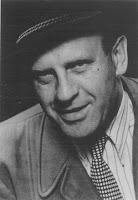
http://en.wikipedia.org/wiki/File:Schindlergrave2010.jpg

lunes, 12 de marzo de 2012
Refugee Blues, WWII Poetry
1-As you read in the introduction, the poem was written half a year before the outbreak of World War II. However, the reader can pinpoint the three major protagonists whose paths will cross tragically in the course of the war. Complete the following sentences:
- The victims are the Jews
- The perpetrators are the Nazis
- The bystanders are the Germans / Europeans
2 -What particular factors led an individual to be defined as belonging to this or that group?
Nazis had a model of the perfect citizen: it was blond with blue eyes. However, they accepted German citizens in their mayority; and christians too. They divided the bands of war into two groups; allies and foes. The mayor division of groups were the Jews. Jews were pursuited and executed during many years, they were sent to the concentration camps too. Other group that was considered a foe were the homosexuals; Nazis executed them without taking them to a court. Black people and the ones with another religion were also considered a threat.
3- Of the three groups, which was the largest? Is their any connection between your answer and the term ‘The Silent Majority’?
The bystanders composed the larger group, and they relate directly to the term "The Silent Majority" because many of them just watched the events without having any intervention, any opinion; and the term "Majority" is applied because they were in a larger number
The bystanders composed the larger group, and they relate directly to the term "The Silent Majority" because many of them just watched the events without having any intervention, any opinion; and the term "Majority" is applied because they were in a larger number
4- What possible relationships could have developed between the victims and the bystanders?
It's a fact that many victims established friendship with many of the bystanders. Some bystanders betrayed de refugees, but many of them protected them; sometimes even hiding them in their houses.
5-Auden presents different situations in which prohibitions against the victims multiply and effectively turn them into refugees. Identify and list some of these prohibitions. What does it mean to have these things taken away from you?
Among this prohibitions are that Jews couldn't go to many public places, such as meetings and churchs. Besides they were pirsuited by German soldiers. This basic things that are taken away make this refugees look like animals; even worse, treatment to them is beyond cruelty.
Among this prohibitions are that Jews couldn't go to many public places, such as meetings and churchs. Besides they were pirsuited by German soldiers. This basic things that are taken away make this refugees look like animals; even worse, treatment to them is beyond cruelty.
6-State bureaucracies are crucial in the lives of ordinary citizens, not to mention threatened population groups like the homeless or people evicted from their homes. Identify the different functionaries or objects that represent bureaucracies for Auden.
In the poem there are stated each of the objects that represent bureaucracies; such as the passport (the jews are stated to have "old ones" and being denied each time they show it), the consul (which prevented them to leave), the committe (told them to wait), and the public meeting (that accussed them of stealing the food).
7-In your opinion, who is a refugee? Can one become a refugee in one’s own home?
In my opinion, a refugee is someone; and it could be anybody, who must hide in order to save his life. Of course that one actually CAN be a refugee inside his own house; in fact many jews were found hidden in their own houses when the nazis occuppied Europe.
8-How can state bureaucracies help refugees or hinder efforts to help?
By changing the laws that bring difficulties to their living conditions, or simply removing them. They can reduce the punishments too.
By changing the laws that bring difficulties to their living conditions, or simply removing them. They can reduce the punishments too.
9-In your opinion, should governments today have the responsibility to take care of refugees in their country?
Yes. In my opinion, refugee are a priority such as poor people in a country. Most refugees live in a way that many people will consider miserable; some would even prefer death before living like them.
lunes, 14 de noviembre de 2011
30's Letters
1)
Phillip Visuain
New York, August 10th, 1931
Dear Phillip
I write to you as a response to your letter, I’m glad you asked how my house and neighborhood is. There’s a lot going on around here, plenty of happy things; but I’m afraid that the bad things exceeded them. First of all, we had to dismount the garage to help paying the food, I’m sad about it because I have a lot of memorable moments in there. I hope you are enjoying your garage in France. Our house now is definitively smaller, or at least it feels like that. We had to sole most of the Brazilian furniture we had; and my room upstairs is now for rent, leaving me on the sofa. I hope we don’t sell it too. The grass we have in the garden is taller than ever, because dad had to fire the gardener; “It was too expensive” according to him. In terms of electricity, dad says we are okay. I think he’s lying, because sometimes it suddenly cuts out and then comes back; and mom told us to turn the lights off past 7:00 PM, so we use candles. With the water we are fine, because dad had the smart idea of placing a well in the backyard. I have to say that although we are passing by this, I and my family are the lucky ones on the street. Mr. Walter, a neighbor and friend of dad, was fired, and so as many other people around here; and will have to leave his house. I wish we could host him, but mom says we need the rent. The police are chasing another neighbor, because he was fired too and start working as a drug dealer. The children that used to play in the park in front of my house stopped coming, because robberies are higher than ever. Also, I have eye-shadows because of the woman next door, Mrs. Abrahams. She cries all night, but I don’t complain because she lost her husband in the war; so that’s why the scandals. The only good thing that cares to me is that mom bought a better pillow to my sofa. But, as I already said, we’re the lucky ones in this neighborhood. I hope you are living better than all of us, after all Paris is the city of beauty, right?
Greetings,
Vicente Jander
2)
Phillip Vusuain
New York, October 3rd, 1932
Dear Phillip
It’s been so long since our last communication. I apologize for that, I have been busy. You asked me how I relate with my family and what kind of activities we do, to help you with your homework. I will tell you happily. First I have to say that I don’t recognize dad anymore; I see my dog more than him on the week because of hi s job at the bank. “Being a manager isn’t easy, one day you will be the owner and understand”, he said to me. He says that otherwise, we would be living on the streets. I appreciate the effort that he’s doing for us, but honestly I would prefer living in the streets if that includes being with him. The only activity that involves both as a father-son is going to the church together. Mom says that in these hard times, we have to give thanks to God for being so gentle with us. I try to speak to dad while in the church, but he makes me shut up for “respect to the lord”. There is another aspect of dad that changed; he started giving us speeches about being polite and having good manners, and that with both of this attitudes we were making the difference between other families. After begging mom, I built a tree-house in the garden. Me and Britney, my sister; used it almost all day long. It was a quiet place to be, not so big and not so short. It was… comfortable, like a way to escape the familiar issues that were taking place, and wait until they solve. The only memorable day I have passed was last Friday; in which mom bought a goose and boiled it. Besides being the most delicious dinner I ever had, later that night I played chess several times with dad. It doesn’t matter that he won all the games; I had the opportunity to talk with him at last. He told me to be more polite at the table, because I ate in a “horribly mean way”; and after that he remembered his childhood and told me that he played chess with his father too, but with the difference that this time the son won all the games. After playing we went to bed, and I was so happy that couldn’t fell asleep until 2:00AM. I hope this information will be useful to you, send me your grade in the homework.
Greetings,
Vicente Jander
jueves, 20 de octubre de 2011
martes, 18 de octubre de 2011
Summary of To Kill a Mockingbird, Chapters 6-7
Chapters 6-7
Jem and Dill followed the orders of Atticus, who orders them to stop bothering the Radley property and that poor man. Although this good attitude only lasts till the last day of Dill in Maycomb, in the moment when Jem and he plan to sneak over to the Radley Place and finds their way in through a loose entrance. Finally Scout gets involved too, and they crawl around the house. While crawling, the three of them see the shadow of a man with a hat on and run away, and they heard a shotgun being shot off behind them. They got away by passing under the fence, but suddenly Jem’s pants get stuck on the fence, so if he wants to get free he would kick them. The kids return home and encounter all the adults on the neighborhood: Miss Maudie, Atticus, and Miss Stephanie Crawford; known as the “neighborhood gossip”. Miss Maudie in his speech declares that Mr. Nathan Radley shot at a Negro in his yard. After that, Atticus asks Jem where his pants are; and Dill interrupts and says that he won Jem’s pants in a poker game. Worried about this, Atticus asks them if they were actually using cards. Jem answers that they were playing with matches. That night, Jem makes his way to the Radley Place, and manages to get back his pants. School began few days later, and Jem tells Scout that he found the pants hanging neatly over the fence, like him someone had found them and just hung them. After school that same day, they found another object hidden in the middle of the knothole: a ball of gray twine. They left it there for a few days, but no one claimed it, so they took it for their own. Among this, Scout declares that he does not feel happy in second grade, so as he did in first, and Jem promises her that school gets more entertaining the farther along one stays. Late that season, another present appears in the knothole: now they were two figures carved in soap to represent Scout and Jem. The three figures are followed by the next objects: chewing gum, a spelling bee medal, and an old pocket watch. The next day, Jem and Scout find that the knothole has been fulfilled with cement, so no more presents are supposed to be delivered.
jueves, 25 de agosto de 2011
Interview: Language
Martín Elorriaga
Vicente Jander
Language change
According to the dictionary language is a body of words and the systems for their use common to a people who are of the same community or nation, the same geographical area, or the same cultural tradition. Humanity has always dealt with language; since cavemen with gestures until now with facebook. Language is the tool that allows us to express ourselves and to understand others. Since the British Empire expanded the English language almost world-wide, there have been more frequent language changes around the world, changing with internal and external attitudes in dialogs. Language is in constant change because the society change and the people start having more needs. There are a lot of theories to explain language change, and for knowing more we want to interview an expert of this matter Mr. German Letelier.
“Language shapes the way we think, and determines what we can think about.” Benjamin Lee Whorf
Interviewee: Germán Letelier
Interview:
Question: 1- What comes to your when we say the word “language”?
Answer: Language is the world, its reality. Language is different to all people. For example, when we talk about the word “home”, people will give to it different meanings. Someone will think about a house, others a place where you can relax and sleep, others a relief; it depends on the experience. So in consequence LANGUAGE IS REALITY is experience and according to that it forms itself and transforms itself.
Question: 2- Is the language you speak part of your identity? Why? Why Not?
Answer: Yes, because the language I speak it’s the language that I have decided to speak; besides I understand that different “moments” of language exist. The language I use in the school is not the same that the one that I use in my house and the one that I use in my house is different with the one that I use with my friends. This action obviously identifies me as a person.
Question: 3- Do you agree with the claim that “The English Language is nobody’s special property”?
Answer: Of course, take another example: New Zealand. The English spoken there is not the same that the English spoken in England, or in the USA. All countries have the right of manipulating the English they speak, to give them their identities. A shared language is a better language.
Question: 4- Would you prefer the fact of having a multiple number of languages in the world or would you prefer English as the only language we should speak?
Answer: I think that the language, as experience, should exist in variation according to time and space. But, there must be a language that should be common world-wide so we can all understand it, and I consider that English is the language that should dominate in that sense.
Question: 5- Why do you think the language changes?
Answer: Because people change, because historical situations change, we change language because space changes. We must understand that the type and concept of language of our parents is different to ours, and that’s for a very simple reason: when our parents where young, for example, they didn’t know the word computer. Today is a universal word. That kind of concepts, concepts those 20 years ago didn’t exist. So ask yourself a question: How will language be in 10 years?
Question: 6- Do you think language reflects power?
Answer: In most cases, it can be a clear proof of power. For example, when Barack Obama established his political party with the phrase “Yes, we can.”, he is giving power to the people, encouraging them to change. I want you to consider that this kind of power is not always going from top to bottom, but sometimes from bottom to top.
Question: 7- According to you should we all know how to use creoles and learn them?
Answer: No, in my opinion learning other alphabets is useless; you just got to stick to your language. Maybe culture will be interesting to learn, but other languages no. I consider it a waste of time.
To conclude, language according to Mr. Letelier identifies people, gives them the particularity of the human being so they can manipulate it at will. Without language, the human species would be considered as any other animal: without intellect and stuck in the same stage. So language in consequence changes constantly, changes with society; following our needs (each time more and more) leading the human evolution and adapting to it. Language makes the man a man. As he said at the end: “Imagine human being without language, the answer is impossible because there would be no human being”.
Suscribirse a:
Entradas (Atom)